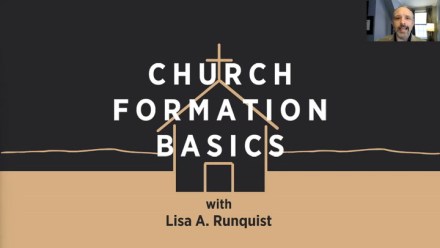
Retirement Planning for Pastors

Early planning can avoid IRS trouble—and provide well when retirement comes.

Last Reviewed: June 23, 2025

As a lawyer, I’ve had many difficult conversations with church leaders.
One of the hardest is telling a church and its pastor that it’s too late to fund the pastor’s retirement.


The Problem: Too Many Pastors Don’t Save

Far too many pastors reach retirement age without enough savings.
As a result:

  • Some pastors can’t retire, even if they want to.
  • Some church boards face resistance from pastors who fear financial uncertainty.
  • Some pastors die without leaving financial support for their surviving spouses.

When problems arise, many proposed quick-fixes are often questionable—or even illegal.


Six Real-Life Examples

These real-world cases show the complex challenges churches and pastors face regarding retirement planning (resolutions for each are shared toward the end of this article).


1. Church Forced to Sell Property to Fund Pastor’s Retirement

  • A pastor served 50 years, earning less than $30,000 annually.
  • He opted out of Social Security, mainly due to lack of cash.
  • The church dissolved and planned to use property sale proceeds to buy an annuity for the pastor.
  • The state attorney general challenged the use of funds for this purpose.

2. Pastor’s Widow Left Without Support

  • Over 15 years, the church discussed—but never finalized—a retirement plan.
  • After the pastor’s death, the church paid small sums to his widow.
  • The Internal Revenue Service (IRS) questioned the legality of payments during a tax-exempt status review.

3. Two Churches Merge; One Pastor Expects Retirement Pay

  • Two churches merged; one pastor initially intended to retire.
  • Later, he expected the merged church to continue paying him a retirement salary.

4. Pastor/CEO Pushes for Separate Retirement Fund

  • A pastor/CEO requested a new, church-funded retirement account managed by himself.
  • Upon retirement, he planned to transfer the entire fund directly to his control.

5. Monk’s Vow of Poverty Leaves Widow with Nothing

  • A monk who took a vow of poverty wanted the church to support his wife after his death.
  • She had never been a church employee and had no legal claim to benefits.

6. “Pastor Emeritus” Role Raises Tax Questions

  • A church created a “Pastor Emeritus” position for a retiring pastor.
  • The arrangement raised legal questions about compensation limits and retirement legality.

Why These Cases Matter

These examples highlight why careful, early planning is essential—to protect pastors, families, and churches from legal and financial risks.

Next: the key questions churches must ask.


Key Questions for Churches

1. Are You Paying Your Pastor Enough?

Fair compensation includes:

  • Covering current living expenses.
  • Allowing for meaningful retirement savings.

Best Practices:

  • Aim for salaries in the median income range of the congregation.
  • Small churches may need bivocational arrangements.
  • No matter the size, retirement contributions should always be considered.

Important:
The pastor should never set his or her own salary.
Only the board may set compensation.


2. Has Your Pastor Opted Out of Social Security?

Opting out of Social Security carries major risks:

  • No retirement, disability, or Medicare benefits.
  • Heavy reliance on private savings.

Solutions:

  • Save aggressively.
  • Work nonministerial jobs to earn Social Security credits.
  • Consider spousal Social Security eligibility if applicable.

Caution:
Social Security should supplement retirement savings—not replace them.


3. How Does Housing Affect the Pastor’s Future?

Pastors often live in church-provided parsonages, raising critical questions:

  • Where will the pastor live after retirement?
  • Has the pastor built home equity?

Solutions:

  • Equity Allowance:
    An equity allowance provides additional taxable income for future housing needs.
  • Housing Allowance:
    A tax-free housing allowance to help pastors purchase homes during active ministry.

Important:
Neither method replaces the need for a retirement savings plan.


4. What Types of Retirement Plans Are Available?

Churches must thoughtfully plan:

  • Set up retirement plans early—even at the pastor’s hire date.
  • Follow denominational plans when available, but review needs individually.
  • Small early contributions grow significantly over time.

Late-stage retirement planning is very difficult and raises compensation risks discussed below.


Funding the Plan: What Churches Must Know

Reasonable Compensation Limits

Contributions to a pastor’s retirement plan count toward total compensation.
Total compensation must remain reasonable to avoid legal risks:

  • Private Benefit: Church assets must serve church purposes.
  • Private Inurement: No insider (e.g., the pastor) may receive personal enrichment from church assets.
  • Intermediate Sanctions:
    If a pastor (or “disqualified person”) receives excess benefits, the IRS can impose severe personal penalties (up to 225%).

How to Ensure Compensation Is Reasonable

Compensation is reasonable if:

  • It matches what similar organizations pay for similar roles.
  • It includes all forms of cash and noncash benefits.
  • It is properly documented and board-approved.

Vesting Retirement Plans:
Deferred compensation (like pensions) must also fit into the overall reasonableness calculation over time—not just in the year it vests.


Achieving a “Safe Harbor” (IRS Best Practices)

To shield the church and pastor, follow these steps:

  1. Approval by a Disinterested Board:
    No board members with personal financial interests vote on compensation.
  2. Use Independent Data:
    Base salaries and benefits on outside surveys and comparable compensation research.
  3. Maintain Adequate Documentation:
    Keep detailed minutes showing how decisions were made and the data reviewed.

When all three are followed, the burden of proof shifts to the IRS if the IRS brings a challenge.


Protecting the Church: Conflicts of Interest

Key Point:
The church does not belong to the pastor.

  • Pastors must not dominate salary or retirement decisions.
  • Churches should have a conflict-of-interest policy and disinterested boards must determine compensation.
  • Board minutes must reflect all retirement plan decisions.

Setting Up Church-Wide Programs for Retired Ministers

Some churches or denominations create benevolence funds to help retired pastors in need.
This does not replace retirement planning but provides important supplemental support.


Transitioning to Full Retirement

When pastors near retirement:

  • They may continue limited duties with reduced salaries.
  • Churches may offer consulting roles or “Pastor Emeritus” positions—but compensation must match services provided.
  • Severance packages may be negotiated if retirement transitions are difficult.

Best Practices for Retirement Planning

To ensure fairness and compliance:

  • Plan early.
  • Fund retirement accounts steadily over time.
  • Use safe harbor procedures for all salary and retirement decisions.
  • Document everything clearly.

Revisited: Resolving the Six Real-Life Examples

Church Forced to Sell Property

  • Documentation showed the pastor’s financial contributions and prior board intentions.
  • The state attorney general allowed an annuity to be purchased.

Pastor’s Widow Receives Payments

  • IRS accepted payments as deferred compensation, due to historical documentation.
  • The small payment amounts also reduced IRS scrutiny.

Merger Retirement Conflict

  • Without documented work performed post-merger, continued salary would violate private inurement rules.
  • A better solution: agree on transition roles and compensation before merger.

Pastor/CEO Separate Fund

  • Solution: Contributions made annually, subject to board approval and reasonable compensation limits.
  • Consider use of a rabbi trust to hold retirement funds.

Monk’s Widow Support

  • A trust fund supported the widow while keeping assets under church control.
  • Payments were taxed appropriately as deferred compensation.

“Pastor Emeritus” Arrangement

  • The pastor continued part-time ministry, justifying ongoing salary and retirement contributions.
  • Compensation was adjusted appropriately based on workload.

Final Thought

The best way to avoid retirement problems is to plan early.
Pastors and churches must work together to ensure long-term financial security, following legal standards and protecting the church’s mission.

We’ve used a combination of AI and human review to make this content easier to read and understand.

Lisa A. Runquist has more than 40 years of experience as a transactional lawyer, both with nonprofit organizations and business organizations.

10 Commandments for Pastors, Politics, and Social Media

10 commandments for pastors thinking of preaching, speaking, or posting about politics in an election cycle. Or any other time.

There are few topics that evoke as much emotion as politics, and church leaders would do well to remember these 10 commandments for pastors when it comes to engaging in politics—particular on social media.

Pastors and church staff are not oblivious to political emotions. Indeed, some of them can be among the most intensely emotional.

The purpose of this post is not to imply that pastors and staff should abandon their convictions. Nor is it to suggest that silence is always the best option. Instead, I hope it is a gentle reminder of ten issues pastors and church staff may want to consider before posting political views and opinions on social media.

10 Commandments for Pastors Posting About Politics on Social Media


You shall remember you are an ambassador for Christ.

All of your written and spoken words should be a reflection of Him.

You shall remember you are your church to many people.

Your words, for better or worse, are a direct reflection on your congregation.

You shall not be a stumbling block to unbelievers.

Many are watching you. Many are reading your words.

You shall refrain from posting when your emotions are high.

Take a break for a day. If you don’t, you will likely regret it later.

You shall remember that others are often posting in the throes of their own anger and emotions.

It is usually best not to engage them then.

You shall remember your words are permanent.

The moment you post, someone has likely captured your article or post, even if you delete it later.

You shall understand some members of your congregation likely have a different view than you.

Is your post worth the disunity that may follow?

You shall not be a distraction to the gospel.

Politics are often an easy detour from that which really matters.

You shall be aware of the long political memory many people have.

Some people are talking today about the comments Christians made in the presidential election four years ago!

You shall be aware that your political opinions may cause disunity with other churches in the community.

Make certain the words are worth the price that is paid.

The writer of Ecclesiastes reminds us in chapter 3, verse 7, that there is “a time to be silent and a time to speak.” For the sake of the gospel, please make certain you have sought God’s wisdom to discern what time it is for you.


Lead Your Church With Confidence—Became a Church Law & Tax Member Today.


This post was adapted from an article that first appeared at ThomRainer.com on March 21, 2016. Thom S. Rainer serves as president and CEO of LifeWay Christian Resources. Among his greatest joys are his family: his wife Nellie Jo; three sons, Sam, Art, and Jess; and seven grandchildren. Dr. Rainer can be found on Twitter @ThomRainer and at facebook.com/Thom.S.Rainer .

For information on the tax and legal guidelines faith-based organizations need to know before jumping into the political fray, see the downloadable resource Politics and the Church .

The Definition of Taxable Income for Churches

Loading the player...

Richard R. Hammar is an attorney, CPA and author specializing in legal and tax issues for churches and clergy.

Reimbursing Lunch Expenses

Churches should refer to an important Tax Court decision when reimbursing lunch expenses.

Last Reviewed: May 27, 2026

Editor’s Note: Since this article was first published, federal tax law has changed and employees no longer can itemize deductions for unreimbursed business expenses. Under the One Big Beautiful Bill Act enacted in July of 2025, miscellaneous itemized deductions (other than educator expenses) are now permanently eliminated. However, this article remains relevant regarding the way the Internal Revenue Service views reimbursements for meal expenses and will treat them as taxable income to the pastor or employee if an accountable reimbursement arrangement is not followed.

There’s a right way churches should go about reimbursing lunch expenses.

In many churches, ministerial lunches are a weekly ritual. Since church matters are discussed, many church treasurers assume that the cost of the lunch can be reimbursed by the church under an accountable arrangement.

As a result, the cost of such lunches is not added to the employees’ taxable compensation for tax reporting purposes.

But is this the correct way to handle lunch expenses? If your church has an accountable reimbursement arrangement, can you reimburse lunch expenses? If so, under what circumstances? Always? Whenever church matters are discussed?

A Tax Court decision addresses this important question.

In Dugan v. Commissioner (T.C. Memo. 1998-373), a medical technician and a physician shared office space.

The two often met at lunchtime to discuss the treatment of their patients and the details of office administration and operations.

The two met at other times as well, but they found that lunchtime was often the best opportunity to meet. They alternated paying for their meals together.

On her federal income tax return, the technician deducted her share of these meal expenses (subject to the 50% reduction that applies to unreimbursed meal expenses).

The IRS disallowed any deduction for the meals on the ground that they were not a legitimate business expense. The technician appealed to the Tax Court.

Were the technician’s lunch expenses deductible?

After all, she discussed both treatment procedures and office operations during these lunches. Unfortunately, the court agreed with the IRS that the expenses were not deductible.

The court began its opinion by noting that “daily meals are an inherently personal expense, and a taxpayer bears a heavy burden in proving they are deductible” as a business expense.

Attorneys’ lunches

The court referred to a previous ruling involving attorneys.

Members of a law firm met every work day at a local restaurant to discuss work-related matters because the lawyers were all litigators and the court was not in session over the noon hour.

A federal appeals court conceded the business purpose for these lunch meetings, and that lawyers “did not dawdle over their lunch,” but it concluded that the meals represented nondeductible personal expenses rather than business expenses.

It observed:

[I]t is undeniable that eating together fosters camaraderie and makes business dealings friendlier and easier. It thus reduces the costs of transacting business, for these costs include the frictions and the failures of communication that are produced by suspicion and mutual misunderstanding, by differences in tastes and manners, and by lack of rapport. A meeting with a client or customer in an office is therefore not a perfect substitute for a lunch with him in a restaurant. But it is different when all the participants in the meal are coworkers, as essentially was the case here …. They know each other well already; they don’t need the social lubrication that a meal with an outsider provides–at least don’t need it daily. If a large firm had a monthly lunch to allow partners to get to know associates, the expense of the meal might well be necessary, and would be allowed by the Internal Revenue Service. But [the law firm in this case] never had more than eight lawyers and did not need a daily lunch to cement relationships among them ….

We may assume it was necessary for the [attorneys] to meet daily to coordinate the work of the firm, and also … that lunch was the most convenient time. But it does not follow that the expense of the lunch was a necessary business expense. The members of the firm had to eat somewhere … Although it saved time to combine lunch with work, the meal itself was not an organic part of the meeting …. Moss v. Commissioner, 758 F.2d 211 (7th Cir. 1985).

Example. The Tax Court ruled that lunch expenses incurred by a group of government attorneys who met for lunch one day each month were not business related despite the fact that business was discussed. The court did concede that “an occasional luncheon meeting with the staff to discuss the operation of the firm would be regarded as an ordinary and necessary expense,” as would “a luncheon to mark an anniversary, retirement or other occasion for an employee” since such expenses “aid in building morale and loyalty and serve as an inducement for others to work more efficiently.” Wells v. Commissioner, 36 T.C.M. 1690 (1977).

The court’s conclusion

Like the attorneys’ lunches, the lunches shared by the medical technician and the physician were not integral to the technician’s business objectives and have not been clearly linked to her production of income.

They met at lunchtime because that was the most convenient and feasible time to meet.

Their business relationship was well established and did not require “social lubrication,” at least not as often as [she and the physician] dined together.

Indeed, the frequency of their lunches together and the reciprocal nature of their meal arrangement belie the existence of any business purpose for the meals …. If taxpayers were permitted to deduct meal expenses in such circumstances then … only the unimaginative would dine at their own expense.

Why does this case matter to how church treasurers reimburse lunch expenses?

Consider the following checklist:

1. Entertainment expenses. Local lunch expenses incurred by church employees qualify as a business expense, and can be reimbursed by a church under an accountable expenses reimbursement arrangement, only if they qualify as entertainment expenses. The requirements for substantiating entertainment expenses are strict. You must demonstrate that the expenses are either (1) directly related to the active conduct of your ministry, or (2) associated with the active conduct of your ministry and the entertainment occurred directly before or after a substantial business discussion.

In order to show that entertainment was directly related to the active conduct of your business, you ordinarily must be able to demonstrate that (1) you had more than a general expectation of deriving income or some other specific business benefit at some indefinite future time; (2) you did engage in business during the entertainment period; and (3) the main purpose of the entertainment was the transaction of business.

In order to show that entertainment was associated with the active conduct of your ministry, you must be able to demonstrate that you had a clear business purpose in incurring the expense, and that the meal or entertainment directly preceded or followed a substantial business discussion.

2. Frequent staff lunches. Frequent lunches with the same members of the church staff are much less likely to qualify as a business expense, even if church business is discussed. For example, if the same three church staff members go out to lunch every Friday, it is very unlikely that any of these lunches will qualify as a business expense. After all, these persons work in the same office, and presumably have considerable interaction during the week. A shared lunch under these circumstances does not constitute an ordinary and necessary business expense.

Key point. It is worth noting that the Tax Court in the Wells case (summarized in an example in this article) met for lunch one day each month. This was considered too frequent to be business related.

3. Occasional lunches with non staff members. Such lunches are more likely to qualify as entertainment expenses, and as a result the costs of these lunches can be reimbursed by the church under an accountable expense reimbursement arrangement. To illustrate, a lunch arranged by a pastor with a local architect to discuss new building plans would qualify as a business expense.

4. Occasional employee lunches. The Tax Court, in a previous decision (the Wells case, summarized in an example in this article) addressing the deductibility of lunch expenses incurred by attorneys one day each month, conceded that “an occasional luncheon meeting with the staff to discuss the operation of the firm would be regarded as an ordinary and necessary expense,” as would “a luncheon to mark an anniversary, retirement or other occasion for an employee” since such expenses “aid in building morale and loyalty and serve as an inducement for others to work more efficiently.”

5. Lunch expenses while traveling. This article only addresses the reimbursement of local lunch expenses. Lunch expenses incurred while church employees are away from town on business travel are business related and can be reimbursed under an accountable arrangement.

6. Other requirements of an accountable arrangement. In order for your church to reimburse expenses under an accountable expense reimbursement arrangement, you must have adopted a reimbursement arrangement that meets the following three requirements: (1) Only business expenses are reimbursed (expenses that would qualify for a business expense deduction on a taxpayer’s personal income tax return). (2) The church only reimburses an expense if the employee substantiates, with written records (including a receipt for expenses of $75 or more), the amount, date, location, and business connection of the expense. In addition, in the case of entertainment expenses (such as local lunch expenses) the employee must document the “occupation or other information relating to the person or persons entertained, including name, title, or other designation, sufficient to establish business relationship to the taxpayer.” (3) Employees must return to the church any reimbursements in excess of substantiated expenses. This article addresses only on the first of these three requirements. Even if a particular lunch qualifies as a business expense, the church may reimburse it under an accountable arrangement only if the other two requirements for an accountable arrangement are met.

If any of these three requirements is not satisfied, the church’s reimbursement of a lunch expense is nonaccountable, and the full amount of the reimbursement must be allocated to the employees’ W-2s.

7. Unreimbursed expenses. This article addresses the tax consequences of a church’s reimbursement of employee lunch expenses. In some cases, church employees pay for their own lunch expenses. Such “unreimbursed” expenses may be deducted as an employee business expense, but only if reimbursement from the church was not available. Further, church employees may deduct only 50% of business related entertainment expenses, including meals. This 50% limitation is incorporated directly into the tax returns (line 9 of Form 2106, and line 24c of Schedule C). Note however that the 50% limitation does not apply to expenses that are reimbursed by an employer under an accountable reimbursement plan. IRS Publication 463 states: “As an employee, you are not subject to the 50% limit if your employer reimburses you under an accountable plan and does not treat your reimbursement as wages.” Publication 463 states that the self employed persons also can avoid the 50% limitation through use of an accountable reimbursement arrangement.

Here are some examples that will illustrate the issues addressed in this article.

Example 1: A church has 3 pastors who for many years have gone out to lunch every Friday. Church business is almost always discussed at these lunches. The cost of these lunches is always charged to a church credit card, and the church treasurer has never reported the church’s reimbursements as taxable income to the pastors by including it on their W-2 forms. This is incorrect. According to the rulings summarized in this article, these lunches do not qualify as business expenses, and as a result they should not be charged to the church credit card. If the pastors continue to charge the lunches to the church credit card, the treasurer will need to allocate the reimbursed expenses to the pastors and report the reimbursements as taxable income on the pastors’ W-2 forms at the end of the year. The treasurer need not withhold additional income taxes because the pastors’ wages are exempt from income tax withholding.

Example 2: Same facts as the previous example, except that nonminister church employees rather than pastors are involved. The answer is the same, except that the church will need to withhold income taxes and FICA taxes from the value of the lunches.

Example 3: A pastor occasionally meets church members for lunch, and charges the cost of these lunches to the church credit card. The purpose of these lunches is for the pastor to become better acquainted with members, and to provide spiritual guidance as needed. These expenses qualify as an entertainment expense. As a result, the expenses reimbursed by the church are accountable so long as the requirements for an accountable reimbursement (summarized in this article) are satisfied.

Example 4: Same facts as the previous example, except that the pastor informs the church treasurer each month of the approximate amount he spent during the previous month on such lunches, and receives a reimbursement check. This arrangement is nonaccountable since the substantiation requirements for an accountable arrangement are not met. As a result, the treasurer will need to add the value of all lunch expense reimbursements to the pastor’s W-2 at the end of the year.

Example 5: A pastor takes the church staff out to lunch twice each year as a means of expressing appreciation for their hard work. The cost of these lunches is charged to the church credit card. These expenses represent a legitimate business expense, and as a result they can be reimbursed by the church under an accountable arrangement so long as they are adequately substantiated. As a result, the church treasurer would not report any of the reimbursements as taxable income. The Tax Court has noted that “an occasional luncheon meeting with the staff to discuss the operation of the firm would be regarded as an ordinary and necessary expense,” as would “a luncheon to mark an anniversary, retirement or other occasion for an employee” since such expenses “aid in building morale and loyalty and serve as an inducement for others to work more efficiently.” Wells v. Commissioner, 36 T.C.M. 1690 (1977).

Example 6: A church’s two pastors go out to lunch once each month. Church business is always discussed, and the cost of the lunches is charged to the church credit card. A federal appeals court has observed that monthly lunches by law firm members “might well be necessary, and would be allowed by the Internal Revenue Service.” Moss v. Commissioner, 758 F.2d 211 (7th Cir. 1985). On the other hand, the Tax Court has ruled that monthly lunch expenses incurred by government attorneys were not business related despite the fact that business was discussed. Wells v. Commissioner, 36 T.C.M. 1690 (1977). In summary, while there is legal support for treating monthly lunch expenses as business-related, but there is also support for the opposite conclusion. This suggests that the business nature of monthly lunch expenses may be challenged by the IRS, but that no penalties would be assessed.

Richard R. Hammar is an attorney, CPA and author specializing in legal and tax issues for churches and clergy.

Ask Richie

👋 Hello! I'm Richie, your AI assistant. How can I help you today?
ajax-loader-largecaret-downcloseHamburger Menuicon_amazonApple PodcastsBio Iconicon_cards_grid_caretChild Abuse Reporting Laws by State IconChurchSalary Iconicon_facebookGoogle Podcastsicon_instagramLegal Library IconLegal Library Iconicon_linkedinLock IconMegaphone IconOnline Learning IconPodcast IconRecent Legal Developments IconRecommended Reading IconRSS IconSubmiticon_select-arrowSpotify IconAlaska State MapAlabama State MapArkansas State MapArizona State MapCalifornia State MapColorado State MapConnecticut State MapWashington DC State MapDelaware State MapFederal MapFlorida State MapGeorgia State MapHawaii State MapIowa State MapIdaho State MapIllinois State MapIndiana State MapKansas State MapKentucky State MapLouisiana State MapMassachusetts State MapMaryland State MapMaine State MapMichigan State MapMinnesota State MapMissouri State MapMississippi State MapMontana State MapMulti State MapNorth Carolina State MapNorth Dakota State MapNebraska State MapNew Hampshire State MapNew Jersey State MapNew Mexico IconNevada State MapNew York State MapOhio State MapOklahoma State MapOregon State MapPennsylvania State MapRhode Island State MapSouth Carolina State MapSouth Dakota State MapTennessee State MapTexas State MapUtah State MapVirginia State MapVermont State MapWashington State MapWisconsin State MapWest Virginia State MapWyoming State IconShopping Cart IconTax Calendar Iconicon_twitteryoutubepauseplay
caret-downclosefacebook-squarehamburgerinstagram-squarelinkedin-squarepauseplaytwitter-square