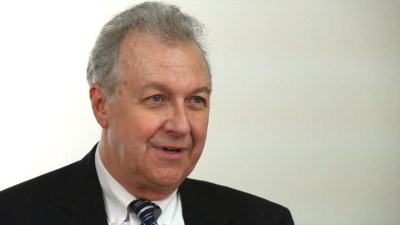
Myron Steeves is an attorney practicing in Newport Beach, California.
His practice serves nonprofit organizations, religious organizations, and churches by offering sound legal guidance from a faith-based perspective. He is an active member of the nonprofit committees of both the California Bar Association and the American Bar Association.
A graduate of Biola University and Georgetown University Law Center, Myron has also served as a Christian missionary to the Middle East. He is the Dean Emeritus at Trinity Law School, a Christian law school devoted to championing a biblical view of human law and government.
He frequently speaks on a wide array of issues involving Christianity and the law, including the integration of faith and law, legal careers as tools for Christian ministry, law and public policy, and law and theology.
The similarities—and distinctives—of these training laws that churches in each state should understand.
Senior Editorial Advisor Board
Sally Wagenmaker
Sally Wagenmaker is a founder and partner in the Chicago office of Wagenmaker & Oberly, a law firm serving churches and other nonprofits that operate on local, national, and international levels. She provides legal counsel in corporate, tax, employment, and real estate matters for tax-exempt clients, including public charities, private foundations, and trade associations.
Wagenmaker’s clients include churches and other religious organizations, schools, and social service providers. Her law firm’s values are consistent with Proverbs 11:24-25, working to serve clients with trustworthiness, creative collaboration, cost efficiency, and mutual respect.
Wagenmaker engages with nonprofit leaders and other legal and tax professionals regularly through presentations, workshops, and conferences. She oversees and writes extensively on relevant nonprofit legal insights through her law firm’s blog. Wagenmaker has authored numerous articles related to federal tax exemption, religious liberty issues, state exemptions, nonprofit governance, and political advocacy.
Wagenmaker previously served as President of the Christian Legal Society. Both professionally and personally, Sally has worked and volunteered with numerous community organizations in her local community related to legal aid, health care, and conflict resolution centers.
Wagenmaker holds bar admissions in Illinois, Georgia, and Michigan, while serving clients out of her offices in Chicago, Illinois, and Grand Haven, Michigan, Wagenmaker earned her law degree from Emory University School of Law and her undergraduate degree from the University of Mississippi.
The legal—and logical—considerations regarding how to handle an office closure.

Senior Editorial Advisor Board
Sarah E. Merkle

Sarah is one of six attorneys in the world to have earned the credentials Certified Professional Parliamentarian-Teacher and Professional Registered Parliamentarian. She helps boards, associations, churches, nonprofits, and public bodies navigate rules applicable to governance and business meetings. Sarah is the editor of the blog, The Law of Order: A Resource on Parliamentary Procedure & the Law, providing accessible answers to organizations’ most common questions.
Sarah became an Editorial Advisor for Church Law & Tax in 2018, and a Senior Editorial Advisor in 2020.
Steps for developing and maintaining a constitutionally sound effort.
Contributors Board
G. Daniel Miller
G. Daniel (Danny) Miller is a partner in the Washington, D.C., office of Conner & Winters, LLP, and is a member of the firm’s employee benefits group.
Miller has been practicing in the employee benefits area since graduating from law school. He is a fellow of the American College of Employee Benefit Counsel and is a member and past director of the SouthWest Benefits Association. Miller is also a past member of the Advisory Committee to the Commissioner of the IRS TE/GE Division and the IRS Mid-Atlantic Pension Liaison Group, and is also a member of the Employee Benefits Committee of the Tax Section of the American Bar Association. Miller served as adjunct professor at the Southern Methodist University School of Law, where for three years he taught a course on taxation of deferred compensation.
Miller earned his law degree from the Vanderbilt University School of Law in 1974. He graduated with his undergraduate degree from Vanderbilt University in 1971.
Senior Editorial Advisor Board
Lisa A. Runquist
Lisa A. Runquist has more than 40 years of experience as a transactional lawyer, both with nonprofit organizations and business organizations. She has working knowledge of corporate law, securities law, franchise law, intellectual property law, employment law, tax law, and constitutional law (First Amendment).
Lisa graduated from the University of Minnesota Law School in 1976. She was admitted to the Minnesota Bar in 1977 and the California Bar in 1978. Her firm, Runquist & Associates, is based in Northridge, California.
Lisa’s work has included forming, maintaining, merging, and dissolving organizations; writing contracts; negotiating; dealing with regulatory agencies; drafting securities offerings; advising clients; analyzing problems; and constructing solutions.
Lisa has served in numerous capacities for a variety of organizations, including adjunct professor at both Trinity Law School and Shiloh University; various committees with the California Bar; several councils and committees of the American Bar Association; and numerous director and board roles with several professional and educational organizations, such as the advisory board of The Exempt Organization Tax Review and the publications board of the American Bar Association’s Business Law Section.
Throughout her career, Lisa has received numerous awards and honors and was the first person to receive both the “Outstanding Lawyer Award” and the “Vanguard Award” for lifetime achievement presented by the ABA’s Business Law Section. In 2011, Runquist was appointed by the Evangelical Council for Financial Accountability (ECFA) to serve on the legal experts panel for the Commission on Accountability and Policy for Religious Organizations, which was formed at the request of Senator Charles Grassley (R-Iowa). She has been rated “AV Preeminent” by Martindale Hubbell for more than 25 years, and she was selected in 2013 as a “Super Lawyer” for Southern California.
Lisa became an Editorial Advisor for Church Law & Tax in 2014, and a Senior Editorial Advisor in 2020.
Early planning can avoid IRS trouble—and provide well when retirement comes.
Senior Editorial Advisor Board
Midgett S. Parker Jr.
Midgett S. Parker, Jr., began practicing law in 1985. He developed and refined his legal acumen in commercial real estate and business law while in private practice with law firms in the Washington, D.C., metropolitan region. In February 2020, Midgett opened the Law Office of Midgett S. Parker, P.A., in Prince George’s County, Maryland
Midgett’s practice involves counseling clients on a variety issues ranging from government regulations to internal operations. He has led numerous land-use cases before local zoning officers, boards, commissions, and councils. Midgett has worked with government officials at federal, state, and local government levels on matters as diverse as tax legislation, affordable housing, and land-use regulations.
Midgett has provided legal counsel to business, church, and developer clients in land acquisition, land-use regulations, financing, construction contracts, and dispute resolution in the construction process. His involvement with churches and other religious institutions includes legal representation through zoning and subdivision; permits and interaction with building inspectors; acquisition contracts, loan negotiation, and refinancing; tax exemptions; arbitration of post construction claims; and final acceptance of the new facility. Midgett has earned and maintained for over 25 years the highest rating (AV) in Martindale-Hubble peer review for strong legal ability and ethical standards.
Midgett became an Editorial Advisor for Church Law & Tax in 2009, and a Senior Editorial Advisor in 2020.
Senior Editorial Advisor Board
Vonna Laue
Vonna Laue has worked with ministries and churches for more than 25 years. Vonna was a partner with a national CPA firm serving not-for-profit entities through audit, review, tax, and advisory services. She then held the role of executive vice president for a Christian ministry that works to enhance trust in the church and ministry community. Vonna now focuses her time on financial and operational consulting for churches and ministries.
Vonna became an editorial advisor for Church Law & Tax in 2009, and a Senior Editorial Advisor in 2020.
Vonna earned her B.S. degree from Black Hills State University and her MBA degree in leadership and human resource management from the University of Colorado. She has served on local and national boards and has published articles in multiple national publications as well as co-authored three books . In 2010, Vonna was inducted into The Church Network’s Church Management Hall of Fame. Her speaking experience includes a variety of regional and national conferences.
Learn the essential skills and responsibilities needed to lead a church accounting department effectively, including financial management and teamwork.
Discover tips for church contingency budgeting, from addressing giving shortfalls to reducing expenses and planning for unexpected financial challenges.
Discover how analyzing church giving trends with monthly reports and year-to-year comparisons can enhance financial planning and stabilize your church’s budget.
Churches can raise tax-deductible funds for music ministry, but direct donations for accompanists may not qualify. Here’s what to know about designated funds.
Churches must provide W-2 forms to ministers by January 31 to comply with IRS regulations. If your church delays issuing your W-2, you may need to escalate the issue with leadership or report noncompliance. Learn your options, including filing without a W-2.
Learn how new church treasurers can address disorganized financial records and decide whether a church audit is necessary.
Senior Editorial Advisor Board
James F. Cobble Jr.
James F. Cobble, Jr., co-founded the Church Law & Tax Report and Church Finance Today print newsletters—the precursors to ChurchLawAndTax.com—in 1987 and 1993, respectively, and other related resources with Richard R. Hammar.
Jim received his master of divinity degree from McCormick Theological Seminary, and also holds doctoral degrees from both Princeton Theological Seminary and the University of Illinois. He combined his training as a pastor and educator with extensive research and writing in the field of church administration, writing or co-writing 20 books and receiving induction into the church management “hall of fame” by The Church Network. He is now retired.
Discover essential accident prevention strategies for church maintenance and construction projects to protect volunteers, staff, and community members.
What churches should do with skiing, snowboarding, and sledding activities.
Attorney and Editor
Matthew Branaugh
Matthew Branaugh is an attorney and editor who has served with Church Law & Tax since 2008. He leads an award-winning team with the planning, creation, and publishing of ChurchLawAndTax.com and numerous print and digital resources. In 2015, he received the Evangelical Press Association’s first-place award in the “Higher Goals in Christian Journalism” category for his work researching and writing about the budgeting and spending habits of churches nationwide.
Matthew earned his undergraduate degree with honors in journalism and public policy, along with a minor in leadership, from the University of Denver. While working full time, he earned his juris doctor (JD) with honors from the University of Denver Sturm College of Law in 2020, and became licensed to practice law that same year.
Matthew is a member of the state bars in Maine and Illinois; a member and workshop presenter for Christian Legal Society’s national organization; a founding member and past president of Christian Legal Society’s New England chapter; a member and conference presenter for The Church Network; and a past member, presenter, and conference leader for the Evangelical Press Association.
Since 2015, Matthew has served as a mentor for students in the University of Denver’s Pioneer Leadership Program. He currently serves as the treasurer for an area youth swimming program and also actively volunteers with his church’s involvement at a local soup kitchen.
Artificial intelligence is making church scams more convincing than ever. From fake pastor emails to AI-generated invoices and voice messages, ministry leaders need stronger safeguards to protect church finances, sensitive data, and their congregations. Here are practical steps every church should take to reduce fraud risk before an attack occurs.
Church leaders must understand the legal, privacy, and governance risks tied to artificial intelligence before adopting AI tools in ministry operations.
A federal court dismissed a high-profile challenge to the Johnson Amendment on procedural grounds, leaving existing IRS restrictions on political activity intact—for now. Here’s what churches and pastors need to understand about the ruling and what could come next.
“One Big Beautiful Bill Act” (OBBBA) overhauls multiple areas of tax law. This executive summary for pastors and church leaders highlights key provisions set to take effect.
A recent IRS settlement signals greater freedom for churches to speak on political candidates—yet murky boundaries and tax-code risks still require caution.
Vacation Bible School creates exciting ministry moments—but also unique risks. Learn why the two-adult rule is vital to your child protection strategy.
Every state has child abuse reporting laws—and many apply to clergy. Learn what your church needs to know, how to comply, and why immediate action is critical.
Tax preparation software may seem like a quick fix for ministers during tax season, but it often overlooks key clergy-specific rules. Learn the top three issues to watch for—and when to seek help from a tax professional.
Many church employees and ministers face unexpected tax bills—often because their churches haven't set up accountable reimbursement arrangements. Learn how this simple policy change can prevent unnecessary tax burdens and keep reimbursements tax-free.
Discover key legal issues affecting churches under President Trump’s second term, including tax policies, employment law, and religious freedom rights.
Religious freedom protections expanded in South Dakota and Montana, meaning 24 states now require higher standards for their governments to meet whenever they “substantially burden” religious exercise.
A federal court case highlights the balance between church employment practices, Title VII protections, and the ecclesiastical abstention doctrine. Discover key legal insights and best practices for handling doctrinal and moral terminations.
Discover key church violence statistics and three essential steps to keep your church safe from crime.
Senior Editorial Advisor Board
Frank Sommerville
Frank Sommerville is an attorney who served for about 30 years at the law firm of Weycer, Kaplan, Pulaski & Zuber, P.C. in Houston and Dallas, Texas. He received his bachelor’s degree in business from Texas Wesleyan University. He received his master’s degree in professional accounting with an emphasis on taxation from the University of Texas at Arlington. His law degree is from the University of Houston Law Center.
Frank holds a license as a Certified Public Accountant. He is also Board Certified in Tax Law by the Texas Board of Legal Specialization. He is rated AV (highest possible) by Martindale-Hubbell Legal Directory.
Frank brings more than thirty years of experience to bear in all his representations. Frank has served nonprofit institutions of all sizes as a bookkeeper, accountant, auditor, tax advisor and advocate, litigator, and legal advisor. He has represented many nonprofit organizations before the Internal Revenue Service (IRS). He also has represented nonprofit organizations under examination by the Texas attorney general.
Frank has presented seminars on nonprofit taxation since 1981. Due to his significant contributions to the church administration profession, Frank was inducted into The Church Network’s “Hall of Fame” in 2003. He contributed to PPC’s Nonprofit Tax & Governance Guide: Helping Organizations Comply (Thomson Reuters, 2011), and also served on the Panel of Legal Experts in 2011 to assist Senator Charles Grassley (R-Iowa) and the Evangelical Council for Financial Accountability’s Commission for Accountability and Policy for Religious Organizations.
Frank became an Editorial Advisor for Church Law & Tax in 2009, and a Senior Editorial Advisor in 2020.
He is married to Elaine Sommerville, and they reside in Grand Prairie, Texas. Frank and Elaine have three daughters, one son, three sons-in-law, and four grandchildren. They are longtime members of Gospel Lighthouse Church in Dallas.
Church employees often serve in multiple capacities, such as administrative staff who also participate in worship ministry. Understanding how exempt and nonexempt classifications interact is critical for avoiding wage-and-hour compliance issues.
Explore the essential guide to church internship programs, covering legal compliance, FLSA rules, risk management, and strategies for training future church leaders while protecting your ministry.
Learn the legalities of mandatory tithing policies for church employees, supported by Supreme Court rulings. Understand requirements for payroll deductions, verification, and labor law compliance.
Conducting background checks for church employees is essential for safety but must be done responsibly to avoid discrimination and legal risks. Learn best practices, including timing, tailored policies, and compliance with federal and state laws.
Understand how to address attendance concerns legally during church hiring interviews. Explore compliant questions that avoid discrimination and align with federal, state, and local regulations.
Suspending a church ministry leader due to misconduct involves legal complexities, including employment classification, discrimination risks, and compliance with church policies. Learn what factors to consider and why legal consultation is essential.
Key insights into exceptions to sales tax exemptions for churches, including when to pay and collect sales tax on transactions.
Senior Editorial Advisor Board
Elaine L. Sommerville
Elaine L. Sommerville is licensed as a certified public accountant by the State of Texas. She has worked in public accounting since 1985. Her practice has and continues to be centered primarily on the tax compliance aspects of nonprofit organizations and churches. She has assisted in the representation of several large case IRS exams as well as other IRS examinations of smaller organizations. Elaine devotes her time to handling various IRS issues for individuals and for exempt organizations of various types. She actively consults on many IRS compliance issues for churches and other nonprofit organizations and prepares information returns of all types for tax exempt organizations.
Elaine holds a Bachelor of Business Administration in Accountancy and Information Systems from the University of Texas of the Permian Basin. She is the sole shareholder of the CPA firm of Sommerville & Associates, P.C. Located in Arlington, Texas, the firm employs 10 staff members who provide tax, accounting, and consulting services to over 300 churches and nonprofit organizations.
Elaine’s CPA practice is not only centered on nonprofit organizations in areas of tax compliance, but she also has a passion for training those who work for churches and nonprofit organizations and those who work with churches and nonprofit organizations. She is a regular speaker for the Texas Society of CPAs, The Church Network, the Houston Church Coop, and she is an instructor for the Association of International Certified Professional Accountants (AICPA). As an instructor for the AICPA, she teaches eight-hour classes to other CPAs in areas of tax planning for nonprofit organizations and in the preparation of the Form 990. She is a contributing author to various publications produced by Christianity Today and by Thomson Reuters/PPC, including the PPC Nonprofit Tax and Governance Guide.
Elaine is a member of the AICPA, the Texas Society of CPAs, and The Church Network. She also serves on the board of Alive at Last, a ministry dedicated to rescuing young women out of the bondage of sex trafficking.
Elaine became an Editorial Advisor for Church Law & Tax in 2009, and a Senior Editorial Advisor in 2020.
She is married to Frank Sommerville, and they reside in Grand Prairie, Texas. Frank and Elaine have three daughters, one son, three sons-in-law, and four grandchildren. They are longtime members of Gospel Lighthouse Church in Dallas where they are frequent growth group leaders and Elaine serves in the worship ministry. When not consumed by work, church, and/or family, they make their way to Galveston to enjoy the beach.
Federal tax law allows qualifying ministers to exclude housing allowances from taxable income while still deducting mortgage interest and real estate taxes. Here’s how the “double deduction” works—and where its limits apply.
Understand the rules for offering a medical stipend to church employees who opt out of coverage and how to ensure compliance with IRS and ACA regulations.
Essential questions and filing tips for ministers seeking a Social Security exemption through Form 4361. Understand the process and make informed decisions.
Churches offering life insurance to pastors must follow tax rules—learn how to stay compliant.
Meet Our Co-Founder and Senior Editor
Co-Founder & Senior Editor
Richard R. Hammar
Richard R. Hammar is a retired attorney, and holds his CPA certificate from the Missouri State Board of Accountancy. He is a graduate of Harvard Law School and attended Harvard Divinity School.
Rich specializes in legal and tax issues for churches and clergy. He is senior editor of ChurchLawAndTax.com and the author of several books published by Church Law & Tax, including Pastor, Church & Law, Fifth Edition, the annual Church & Clergy Tax Guide, and Reducing the Risk, a child sexual abuse awareness training program.
Rich wrote the first edition of Pastor, Church & Law in 1983. He co-founded the Church Law & Tax Report and Church Finance Today print newsletters—the precursors to ChurchLawAndTax.com—in 1987 and 1993, respectively, and other related resources with James Cobble. He has contributed articles or comments to numerous journals and publications, including Christianity Today, Christian Century, and Enrichment.
Rich is a frequent speaker at legal and tax conferences, occasionally teaches church law at seminaries and colleges, and often consults with attorneys, CPAs, and church and denominational leaders on legal and tax issues. He has been a lecturer at the annual Washington Nonprofit Legal and Tax Conference; addressed a National Institute of the American Bar Association on the tort liability of charitable and religious organizations; has been a featured speaker at the annual Program on Philanthropy and Law sponsored by the New York University School of Law; and has taught continuing education seminars at several institutions, including Princeton Theological Seminary and Emory University.
Rich has been inducted into the church management “hall of fame” by The Church Network, and has served on the boards of several prominent charities, including the Evangelical Council for Financial Accountability (ECFA).
He is a member with inactive status for the Missouri Bar Association, and a past member of the American Institute of Certified Public Accountants. He was admitted to practice before the United States Tax Court. In 2009, he became a Registered Parliamentarian by successfully completing a qualifying examination administered by the National Association of Parliamentarians. He joined the ranks of 270 other Registered Parliamentarians in the United States.
A major new law—the One Big Beautiful Bill Act—plus court rulings and IRS actions brought 50 federal tax developments that churches and clergy need to track for 2025 tax returns and 2026 compliance. This overview highlights a portion of that list.
“One Big Beautiful Bill Act” (OBBBA) overhauls multiple areas of tax law. This executive summary for pastors and church leaders highlights key provisions set to take effect.
The Court's ruling limits the authority of individual federal district judges and helps preserve key religious tax benefits like the housing allowance.
Church leaders need to know: Can one federal judge issue a ruling that binds all 50 states? The answer matters—especially when clergy housing allowances are at stake.
Among other important items, quarterly federal tax returns are due along with Affordable Care Act forms 1095-C and 1094-C for employers with 50 or more FTEs.
Along with monthly and semiweekly requirements, note quarterly filing, individual tax returns and contributions, and forms pertinent to your church or ministry.
Discover essential tax and compensation considerations for clergy, including salary structuring, housing allowances, and equity planning for retirement.
Understand how to manage church employee resignations with this guide covering resignation timing, retraction rules, employment policies, and board member liability. Ensure clarity and compliance in your church operations.
December is a great time for church employees to review their W-4 forms to ensure proper tax withholding. Changes in income, dependents, or expenses can impact tax liability, making updates essential.
Employment policies in churches often face legal challenges, from the enforceability of non-compete clauses to the requirement of consideration for policy changes. Learn how to navigate these issues effectively while maintaining fairness and compliance.
Church boards may attempt to revoke irrevocable retirement benefits, but legal factors like consideration and detrimental reliance may impact enforceability.
Allowing outside groups to use church property poses liability risks—understanding insurance coverage and legal precautions is essential for church leaders.
Discover essential accident prevention strategies for church maintenance and construction projects to protect volunteers, staff, and community members.
Churches often rely on minors to assist in youth programs. Learn effective screening methods, including reference checks and community practices, to ensure safety and reduce liability.
Discover the advantages of mediation and arbitration for resolving church disputes. Reduce costs, preserve relationships, and align with biblical principles by adopting a clear arbitration policy.
Churches must comply with payroll tax withholding rules, including proper handling of W-4 forms and employee exemptions. This guide covers IRS regulations, common tax protester arguments, and best practices for ensuring compliance with federal tax laws.
Before granting a retiring pastor the title of pastor emeritus, churches must carefully review compensation agreements, legal responsibilities, and tax obligations. Learn the key factors to consider for a smooth transition.
Layoffs in a church setting require careful planning to ensure compliance with employment laws and ethical considerations. Learn how to protect your church, navigate discrimination risks, and manage severance, benefits, and legal obligations.
Churches must navigate complex legal and ethical issues when accessing employee phone calls, emails, and computer files. Learn how federal laws like the Wiretap Act, state privacy laws, and best practices affect workplace monitoring in ministry settings.
Church leaders may consider polygraph testing when dealing with staff misconduct, but federal law imposes strict limits. Learn how the Employee Polygraph Protection Act applies to churches, key exemptions, and legal best practices.
Discover the tax implications of reclassifying an employee as self-employed, including IRS guidelines, potential penalties, and compliance strategies for churches.
Understanding sales tax exemptions in church construction projects is crucial for contractors and suppliers. This guide outlines key responsibilities and precautions to ensure compliance with state regulations.
Discover essential steps for handling embezzlement in churches, including audits, legal actions, and restoring accountability within your congregation.